What Is Link Building? A Complete Guide for 2026
Within SEO, Link Building plays an important role for the ranking of any business on search engines. You can say without link building SEO is incomplete because powerful backlinks helps google to trust on your business. When you get a link from industry leader google will automatically trust your brand. High Authority backlink is a vote of confidence and it helps both google and users to trust on your brand.
What Is Link Building?
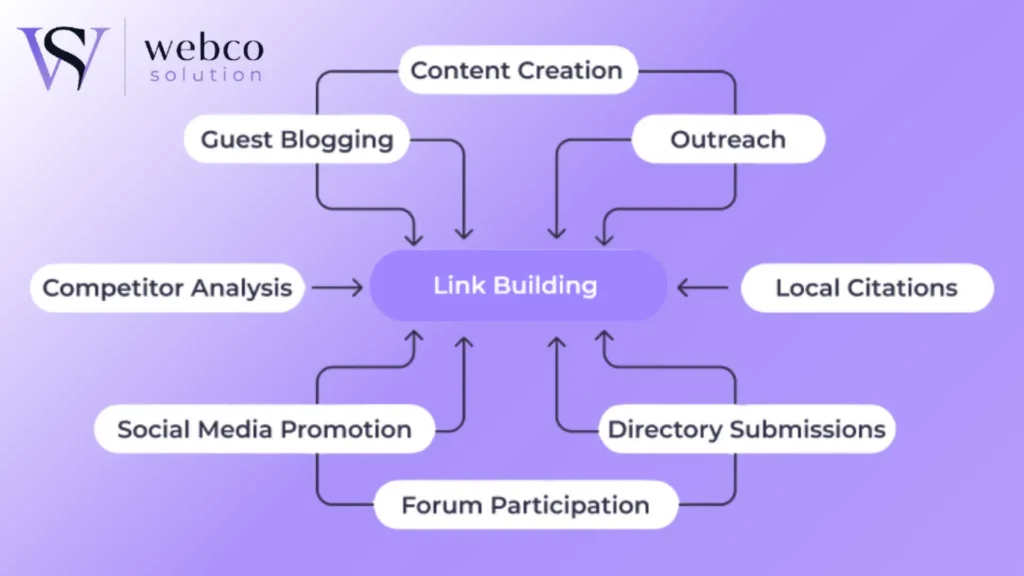
Link building is the process of getting backlink from other websites to your website. In SEO terms, these inbound links are called backlinks.
Search engines like Google may see backlinks as votes of confidence. When a reputable, relevant website links to your page, it signals that your content is trustworthy, useful, and worth surfacing in search results. The more high-quality niche relevant votes are earned by you, the more ranking and authority are built by your site over time which generally converts into more organic traffic, and more qualified leads.
A single link back from a respected,relevant publication carries far more weight than dozens of links from random, low-quality websites.
Why Link Building Still Matters
Some SEO’s claim backlinks are becoming less important as search engines lean more on AI and content quality signals. There’s truth to that shift but links are still a ranking factor for a new business. They’ve evolved.
Here’s what backlinks still do for your site:
- Signal trust and authority. Links are used by search engines as signals to judge whether your content deserves to rank.
- Help search engines discover your pages.Your pages should be discovered by search engines. Links are followed by crawlers to find new and updated content across the web.
- Drive referral traffic. Real visitors can be sent to your page by a well-placed backlink on a relevant site, not just SEO value.
- Build brand visibility. How both users and AI-driven search tools perceive your brand is strengthened by being mentioned (linked or not) alongside respected names in your industry.
Types of Links You Should Know
Not all links are created equal. The different types are helped to be understood by you to evaluate what’s actually worth pursuing.
Backlinks (External Links)
Links from another website pointing to yours. These are the core currency of link building.
Internal Links
Links between pages on your own site. These don’t build external authority, but they help search engines to understand your site structure and distribute authority across your websites’ pages.
Do follow vs. No follow Links
A link passes authority to the destination page. This is called Dofollow. A Nofollow link back includes a tag telling search engines not to count it as an endorsement. Dofollow links are generally more valuable for SEO, though Nofollow links can still drive traffic and brand exposure.
Editorial Links
Links earned naturally because a writer or editor found your content valuable enough to cite the gold standard of link building.
Link earned naturally by a writer or editor because your content really add value to their audience. That type of links are called editorial backlinks.
Guest Post Links
Links earned by contributing an article to another website in your industry, typically including a link back to your site within the content or author bio.
How Link Building Actually Works
A real link building campaign generally follows this process:
- Create content worth linking to. This could be original research, in-depth guides, useful tools, or data-driven insights content that gives other websites a genuine reason to reference you.
- Identify relevant, authoritative websites in your niche that are a good fit for a link or mention.
- Reach out. This might mean pitching a guest post, offering a resource for an existing article, or introducing your content to a journalist or blogger.
- Earn the placement. Once a site agrees, your link goes live — either within an article, a resource page, or a guest contribution.
- Track and measure. Monitor which links you’ve earned, their authority, and how they’re impacting your rankings and traffic over time.
This is exactly where a service like guest posting comes in it’s one of the most direct, controllable ways to earn relevant backlinks from real, established websites, rather than waiting for links to happen organically.
Guest Posting: A Core Link Building Strategy
Guest posting means writing and publishing an article on someone else’s website usually in exchange for a byline, an author bio link, or a contextual link within the content.
Done well, guest posting offers three benefits at once:
- A quality backlink from a relevant, established site
- Exposure to a new, established audience in your niche
- Credibility by association, since your brand appears alongside other trusted voices in the space
The key word is “done well.” Guest posting only works when it targets real publications with genuine readerships and editorial standards — not low-quality sites that exist purely to sell links. This is where working with an experienced team matters: knowing which sites are worth pitching (and which aren’t) can be the difference between a link that helps your rankings and one that quietly puts your site at risk.
Link Building Best Practices
- Prioritize relevance over volume. A single link from a site in your industry is worth more than ten unrelated ones.
- Check site quality before pursuing a link. Look at organic traffic, editorial standards, and topical relevance, not just a raw authority score.
- Diversify your anchor text. Overusing the same exact-match phrase can look manipulative to search engines.
- Avoid shortcuts. Buying links in bulk, using private blog networks (PBNs), or joining link farms violates search engine guidelines and can result in penalties.
- Think long-term. Sustainable link building compounds over months and years it’s not a one-time task.
What to Avoid
Some tactics promise fast results but carry real risk:
- Paid link schemes with no editorial oversight
- Automated or mass-submitted directory links
- Guest posts on sites with no real audience or relevance to your niche
- Exact-match anchor text spam across many low-quality domains
If a backlink profile looks unnatural, search engines can discount those links — or in more serious cases, apply a manual penalty. Ethical, relevance-first link building protects your site while still building authority.
How WebcoSolution Can Help
Link building takes research, relationships, and judgment about which opportunities are actually worth pursuing. That’s exactly what our services are built around:
- Link Building Services — earning relevant, quality backlinks from real, authoritative websites in your niche
- Guest Posting — placing your content and links on established, relevant publications with genuine audiences
- SEO Services — tying link building into a broader strategy so your rankings grow sustainably, not just temporarily
If you’re ready to build authority the right way, WebcoSolution can help you find the right opportunities and execute a strategy that fits your site and industry.
Frequently Asked Questions
Is link building still relevant in 2026?
Yes. While search engines increasingly weigh content quality and relevance signals, backlinks remain a core trust and discovery signal — especially high-quality, relevant ones.
How many backlinks do I need?
There’s no universal number. A handful of highly relevant, high-authority links will typically outperform hundreds of low-quality ones.
Is guest posting still effective for SEO?
Yes, when done on real, relevant, editorially-run websites. Guest posting on low-quality “link farm” sites can do more harm than good.
How long does link building take to show results?
Most link building campaigns take a few months to show measurable ranking movement, since search engines need time to crawl, evaluate, and factor in new links.